İşin Kalbi: Büyük Bir Çocuk Hastanesi Kardiyak Bakım için Açık Kaynak NVIDIA Yapay Zekayı Nasıl Kullanıyor?
Özgün başlık: Heart of the Matter: How a Major Children’s Hospital Uses Open Source NVIDIA AI for Cardiac Care
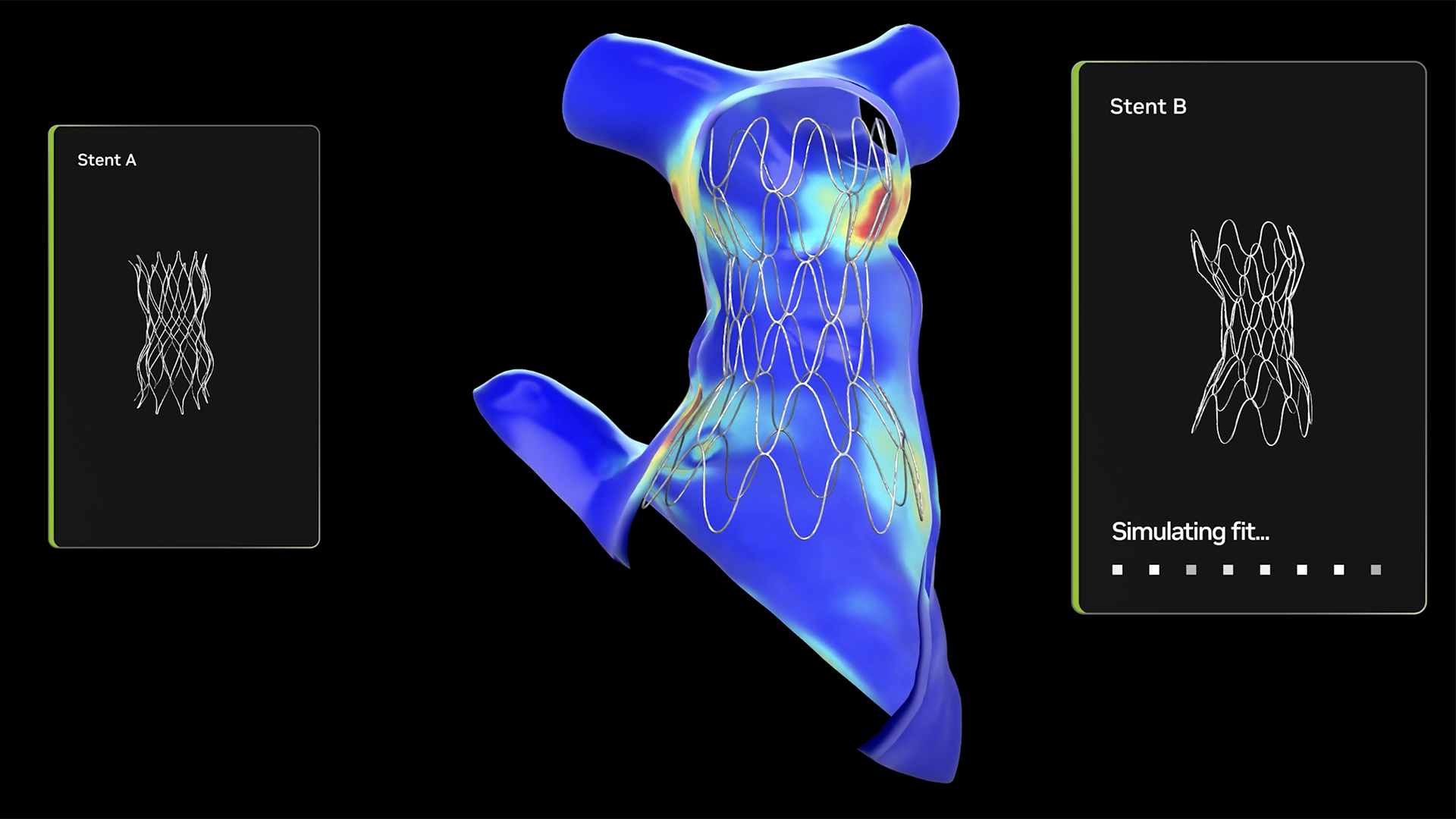
Children’s Hospital of Philadelphia is using open source AI tools to model children’s hearts in seconds — with the goal of enabling safer, more precise care for kids with congenital heart disease. About 1% of all live births involve a congenital heart defect — and no two are alike. A child born with a hole between the lower chambers of their heart, or a leaking valve in the single pumping chamber keeping them alive, needs care that fits their exact anatomy. Historically, the devices surgeons reach for were almost never designed with that specific child in mind. “You’ve got a one-of-a-kind kid and an off-the-shelf device,” said Dr. Matthew Jolley, a cardiologist and researcher at Children’s Hospital of Philadelphia, or CHOP. “Our job is to find what fits — and modeling lets us do that before anyone goes into the cath lab or operating room.” CHOP’s cardiac modeling service, built on MONAI — an open source medical imaging framework cofounded by NVIDIA — takes the images a child’s care team already has, such as CT scans, MRI and 3D ultrasound, and produces anatomically precise heart models in just seconds. A workflow that once required four hours of work by a skilled researcher now completes fast enough for routine clinical use. The approach is spreading. More than 20 children’s hospitals across the U.S. now run cardiac modeling programs. At Boston Children’s Hospital, modeling supports more than half of all cardiac surgeries — roughly 500 cases a year.
CHOP expects to reach about 200 modeled cases this year. Where this work began in cardiac care, CHOP is now aiming to apply the same tools across multiple disciplines through the IDEA Lab, part of the hospital’s Morgan Center for Research and Innovation. Research to Standard of Care — a Decadelong Journey When Jolley joined CHOP in 2015, 3D echocardiography was just coming online. There were tools for modeling adult valves, but almost nothing built for the complex, small anatomies he was treating. His lab worked with the open source community to build SlicerHeart — an extension of 3D Slicer open source software for visualizing, segmenting and analyzing 3D medical images — and began developing workflows to model pediatric hearts and valves from multiple imaging modalities. For years, producing a single model meant a skilled research assistant spending hours at a workstation. Machine learning changed that.